Why I Keep Coming Back to Seiyu TRIAL
If you’ve spent any time living in Tokyo, you already know the city has no shortage of supermarkets. Every neighborhood seems to have at least two or three competing for your loyalty. Some are sleek and modern. Some lean into organic and premium. Some stock an impressive range of imported goods at prices that make you wince a little every time you reach for the peanut butter. And some are just… there, because you need milk and it’s the closest option.
After years of rotating between the usual suspects, I keep coming back to one: Seiyu TRIAL. It’s not flashy. It doesn’t have a trendy rebrand or an Instagram-worthy interior. What it has is something far more valuable — genuinely good products at prices that make you do a double-take. Whether you’re a newly arrived expat trying to figure out how to feed yourself without spending a fortune, or a long-term Tokyo resident who’s learned to be selective about where every yen goes, Seiyu TRIAL deserves a spot in your weekly routine. Here’s everything you need to know.
01 — What Even Is Seiyu TRIAL?
Fair question. The name sounds like two stores had a merger meeting and forgot to pick one winner — because that’s essentially what happened.
TRIAL is a major Japanese discount supermarket chain with locations across the country, known for aggressive pricing and a strong private-label program. Seiyu (西友) is the beloved neighborhood grocery chain that’s been a fixture of Tokyo life for decades. When TRIAL acquired Seiyu, rather than tearing everything down and starting fresh, they did the smart thing: kept the existing store locations and simply rebranded them as Seiyu TRIAL.
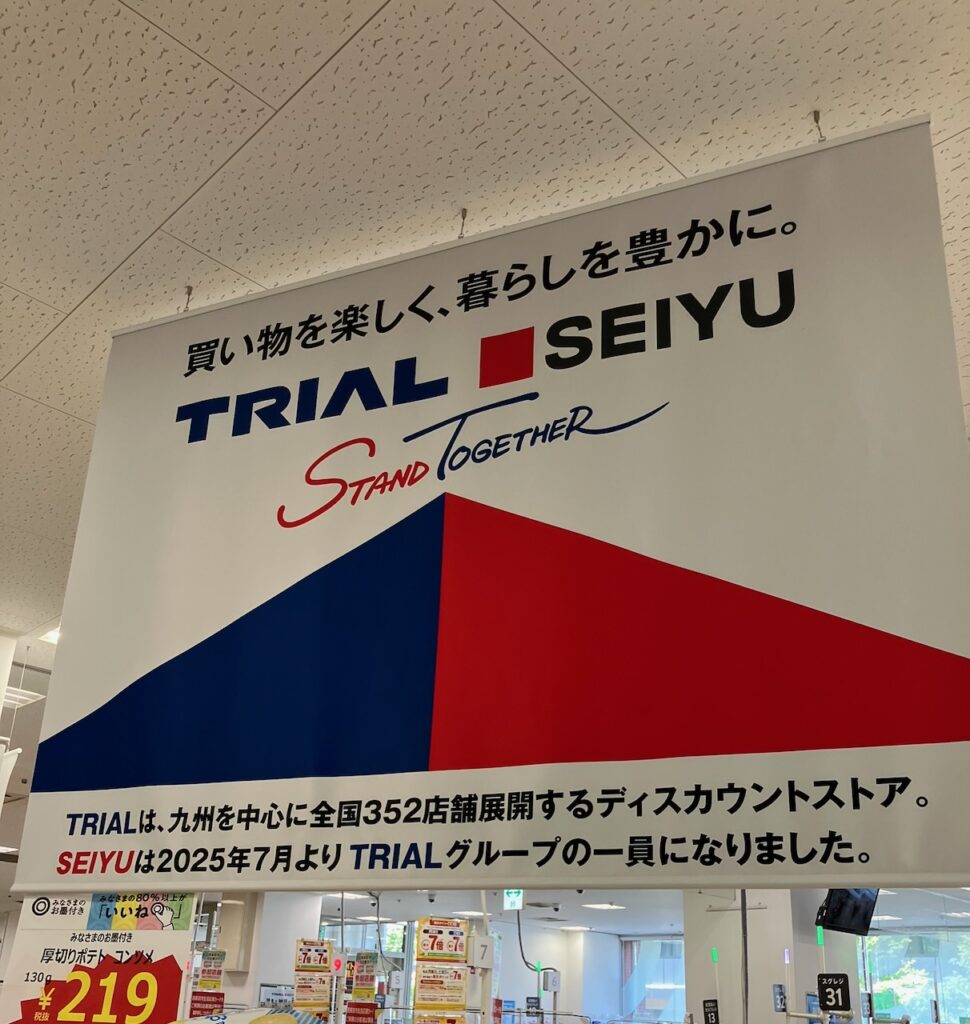
The result is a chain with roughly 74 locations across Tokyo alone. That kind of footprint means that no matter which ward you’re living in — Shinjuku, Setagaya, Nerima, wherever — there’s a very good chance there’s a Seiyu TRIAL within walking distance. Many stores sit right by train stations, making a quick stop on the way home from work almost effortless. For expats still getting their bearings in a new city, that kind of accessibility matters more than people realize.
02 — The Private Label That Actually Earns Its Shelf Space
Most supermarket private labels exist for one reason: to offer a cheaper alternative that you reach for when you’re being careful with money and feel vaguely guilty about it. Seiyu TRIAL’s flagship private label, “Minna no Osumitsuki” (皆様のお墨付き) — which translates roughly to “Everyone’s Seal of Approval” — operates on a completely different philosophy.
Only products that clear an 80% approval threshold in independent third-party consumer testing make it to the shelf. Not internal taste panels. Not marketing sign-offs. Actual consumers, blind tests, a real bar to clear.
The standout for me is the soy sauce cup noodles — ¥119 (¥130 with tax / approx. $0.83 USD) — with a consumer approval rating of 95.4%. At that price point, they punch so far above their weight that it genuinely makes you question what you’ve been paying for in other brands. For anyone new to Japan who wants to explore Japanese convenience food without committing to an expensive sit-down meal, this is the ideal starting point.
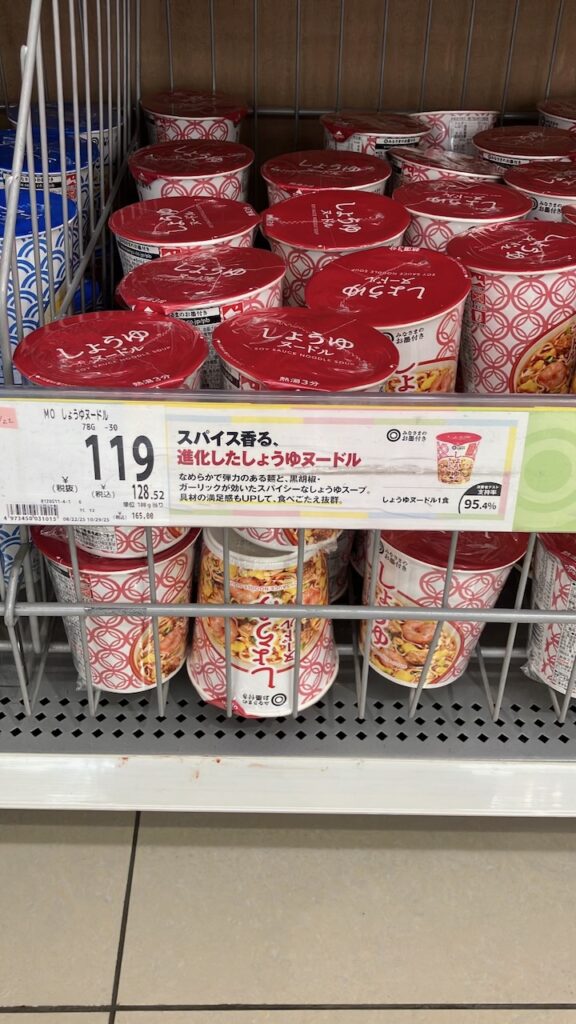
The range doesn’t stop at noodles. Retort curry, frozen gyoza, snack foods — the Minna no Osumitsuki line covers a surprising amount of ground, and the consistent quality threshold means you can grab almost anything from the range with confidence.
03 — The Shokupan: Milk Bread Worth Getting Excited About
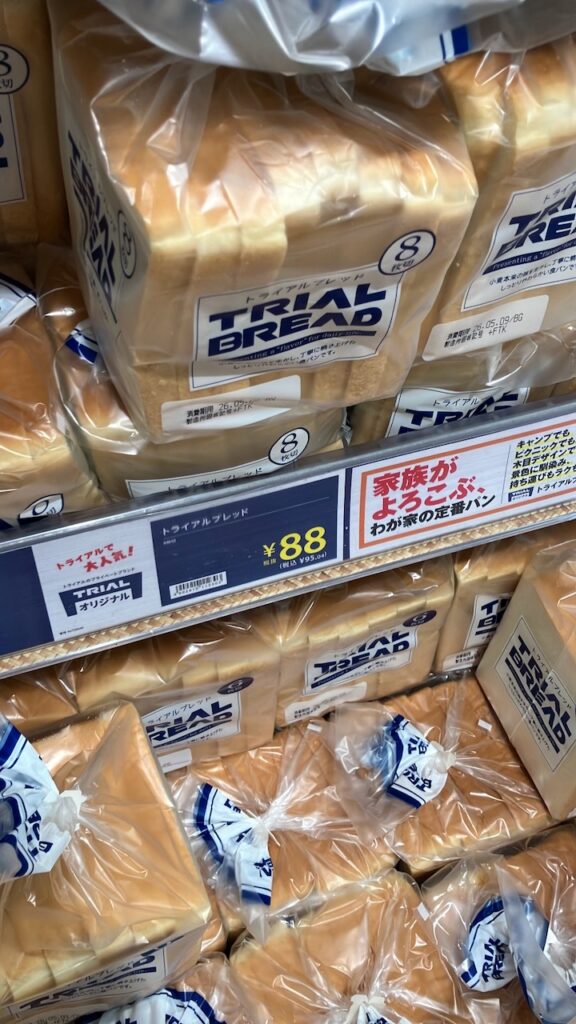
Japanese milk bread — shokupan (食パン) — might be the most underrated item in the entire store. If you haven’t had it before, the texture is unlike anything a typical Western loaf can offer: soft, pillowy, with a gentle sweetness and a tender crumb that makes you wonder why bread anywhere else bothers. It’s a breakfast staple across Japan, and once you’ve had it, it’s genuinely hard to go back.
TRIAL’s own milk bread comes in an 8-slice loaf for ¥88 (¥96 with tax / approx. $0.62 USD). Less than a dollar for a loaf that’ll make your mornings noticeably better. Toast it lightly, add a little butter, maybe a drizzle of honey — and suddenly breakfast feels like something worth sitting down for rather than something to survive on the way out the door. It’s the kind of small daily pleasure that sneaks up on you, and at that price, there’s no reason not to keep two loaves in the house at all times.
04 — The Katsudon Bento: A Cultural Landmark in a Plastic Container
Now for the item that has saved me more times than I care to admit — and the one that stops first-time shoppers dead in their tracks.
For the uninitiated: katsudon (カツ丼) is a rice bowl topped with a breaded, deep-fried pork cutlet simmered in a sweet-savory dashi broth and finished with a soft, barely-set egg. It’s the kind of dish that sits at the intersection of comfort food and genuine culinary craft. At a dedicated katsudon restaurant, you’d expect to pay upwards of ¥1,000 for a bowl. A decent one closer to ¥1,500.
Seiyu TRIAL’s rosu katsu-jū bento is ¥277 before tax. That’s ¥304 with tax. Roughly $1.95 USD.
I’ll let that sit for a moment.
Every single person I’ve watched pick this up for the first time has had the same reaction: they look at the price, look at the bento, look at the price again, and then just stand there in the aisle for a second, genuinely unable to process what they’re seeing. It’s become one of my quiet pleasures — watching that moment of disbelief play out in real time.
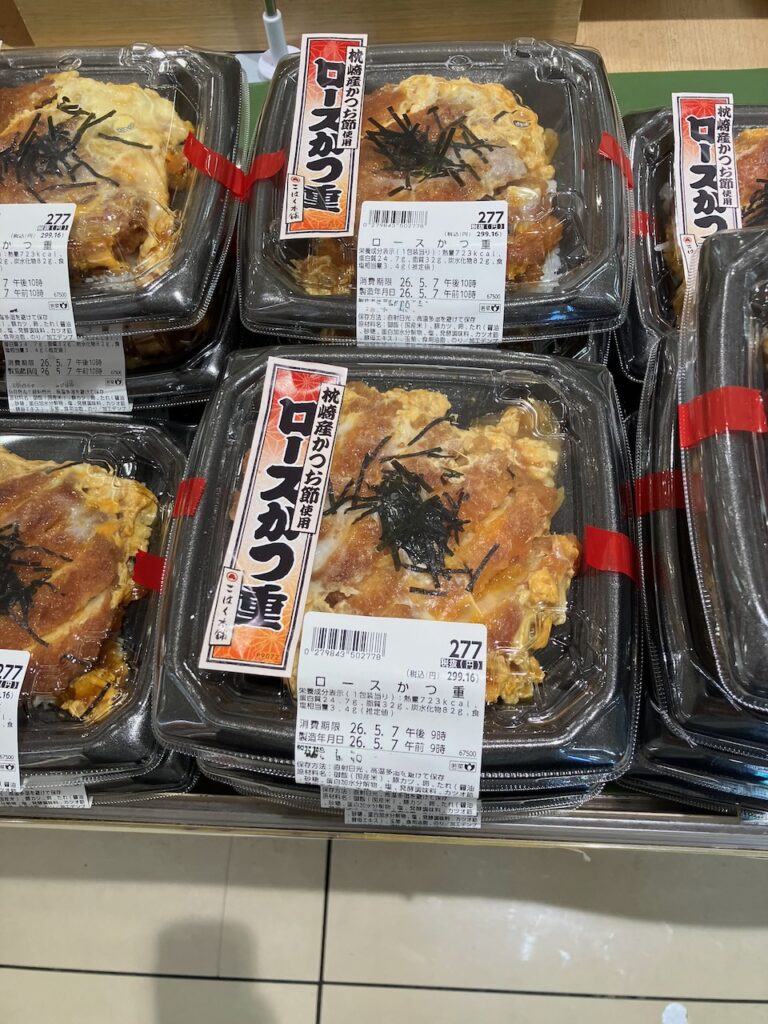
And then there’s the cutlet itself — because the price alone doesn’t tell the whole story. Look at the cross-section. The cutlet is thick — properly, substantially thick in a way that has no business existing in a sub-¥300 bento. This is not a thin, sad excuse for a cutlet stretched across a bed of rice to create the illusion of value. This is a real piece of pork, breaded properly, fried properly, sitting on top of your rice like it owns the place.
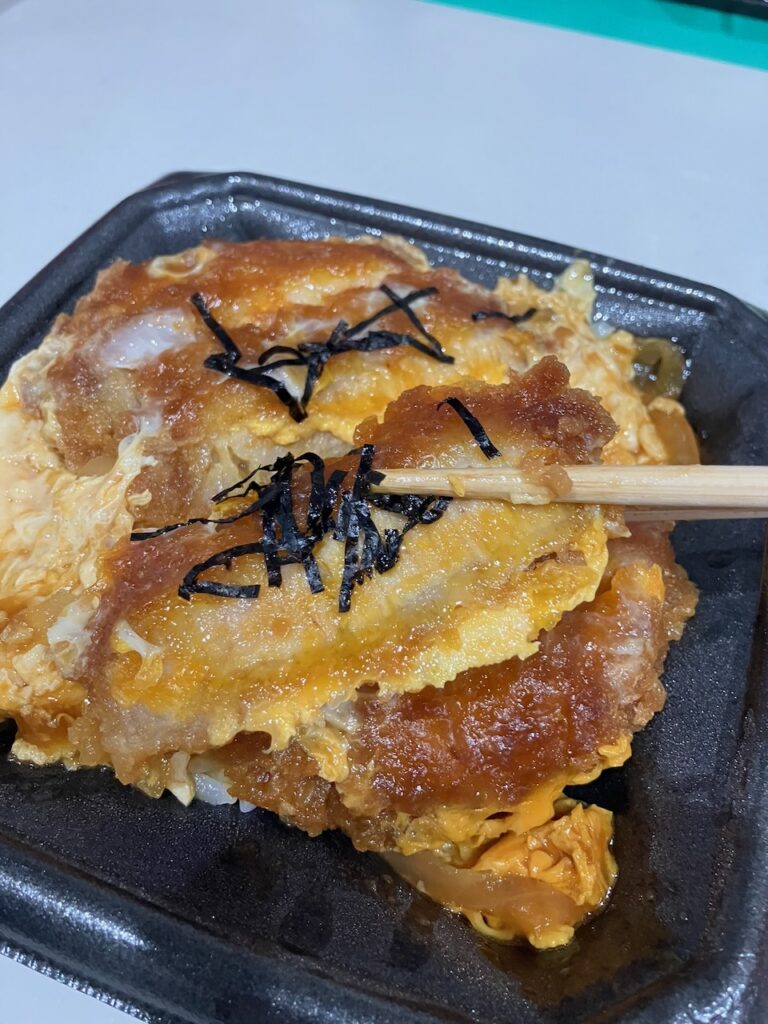
Every bite releases a little wave of savory broth, the egg pulls it together, and the whole thing is just deeply, unapologetically good. The katsuobushi used comes from Makurazaki, Kagoshima — a detail that tells you this bento isn’t cutting corners where it counts.
The numbers back it up too. This bento sells 15 million units a year across TRIAL stores. Fifteen million. That’s not a sleeper hit — that’s a phenomenon. And once you’ve had one, the number makes complete sense.
Personally, this bento has become my go-to in the days before payday, or on those evenings when cooking feels like a task I simply cannot take on. It’s filling, it tastes exactly like it should, and the value is frankly a little absurd. This is not supermarket food making excuses for itself. This is supermarket food that’s proud of what it is.
05 — The Sōzai Section: Fried Food Done Right
If the katsudon bento is the headline act, the sōzai (惣菜) section — the prepared foods counter — is the supporting cast that deserves its own spotlight.
Japanese supermarket fried food is a category that most expats discover by accident and then become quietly devoted to. The karaage (唐揚げ) — Japanese fried chicken — at Seiyu TRIAL is a particular highlight. Juicy, well-seasoned, with a thin crust that stays crisp even after sitting under the heat lamps for a while. A small pack runs around ¥200–¥250, which makes it an easy addition to any basket.
Beyond karaage, the sōzai counter typically offers korokke (コロッケ), age-gyoza (揚げ餃子), chicken nanban, and a rotating selection of seasonal items. Prices are almost uniformly under ¥300 per item. The quality is consistently better than the price suggests — a theme you’ll notice runs through everything at this store.
One practical tip: the sōzai section tends to be freshest in the early evening, roughly between 5pm and 7pm, when the after-work crowd comes through. If you’re shopping later in the evening, you’ll often find discounted stickers (割引シール) on items approaching their sell-by time — which brings the already-low prices down even further.
06 — The Bottom Line
Seiyu TRIAL isn’t trying to be the most exciting place to shop in Tokyo. It’s trying to be the most reliable — and in that, it more than succeeds.
The Minna no Osumitsuki range gives you a consumer-tested shortcut to real value. The shokupan is proof that the best things in life can cost under a dollar. The katsudon bento — with that ridiculous cutlet and that absurd price tag — is a standing argument that Japanese supermarket culture takes quality seriously at every price point. And the sōzai counter is the kind of daily discovery that makes living in Japan genuinely enjoyable.
With 74 locations across the city, chances are there’s one near you. Walk in, grab the katsudon bento, throw a pack of cup noodles in your basket, pick up a loaf of shokupan and some karaage on the way out — and see for yourself why this place has earned its place in the daily routine of so many Tokyo residents. Once it’s in your routine, it’s hard to imagine shopping anywhere else.
I’ll be covering more of what Seiyu TRIAL has to offer in future posts. There’s a lot more ground to cover.
All prices before tax (税抜). USD conversions based on approx. ¥156/dollar (May 2026). — massan


Comments